
01 / FLY
The Campaign
Pilot the ball through notes, gates, slides and arcs. Hit shards for bonus, dodge discordants, and earn a C or better to unlock the next level.
Sing to fly. Hold a pitch to soar. Drop into the gates and ride the slides. Pitch Pilot turns your phone into a neon flight grid powered entirely by your voice.
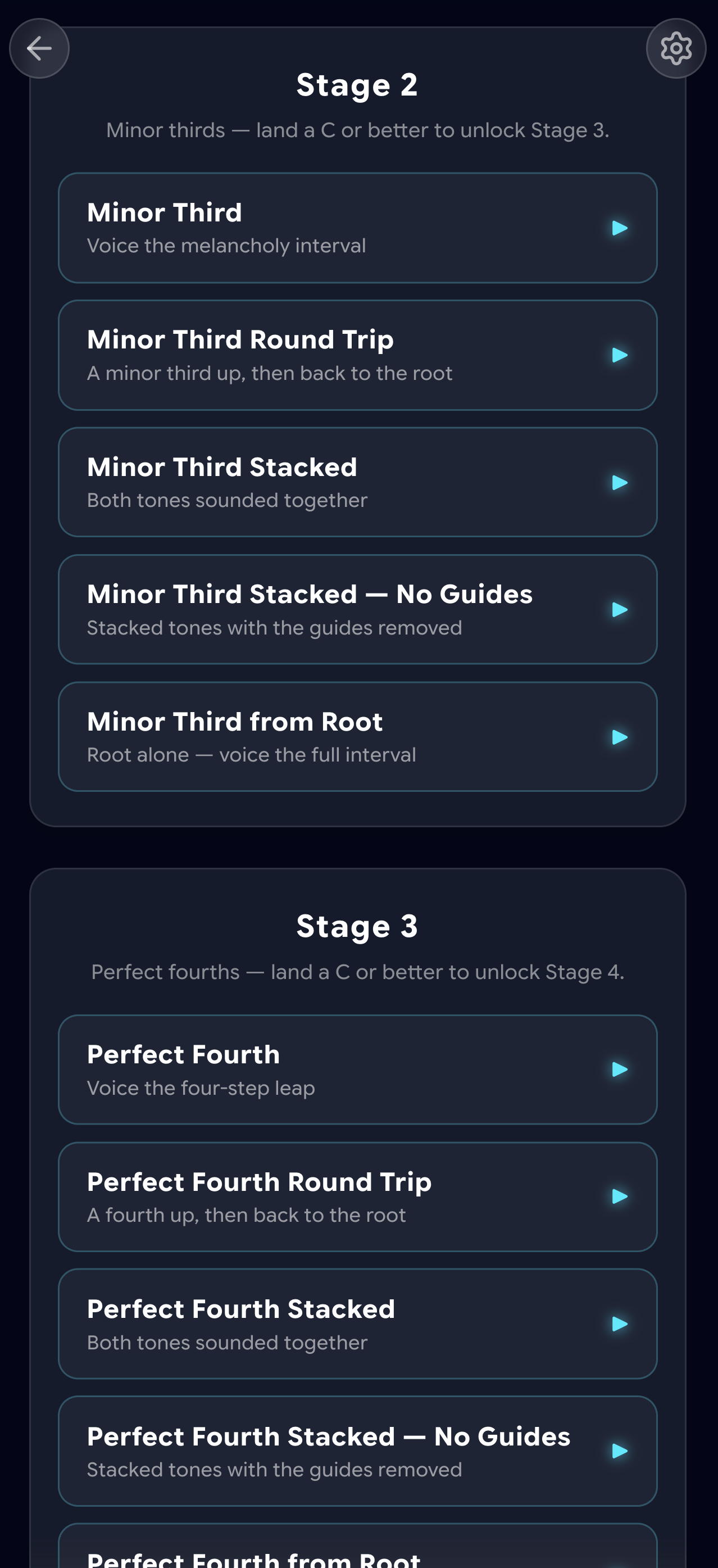
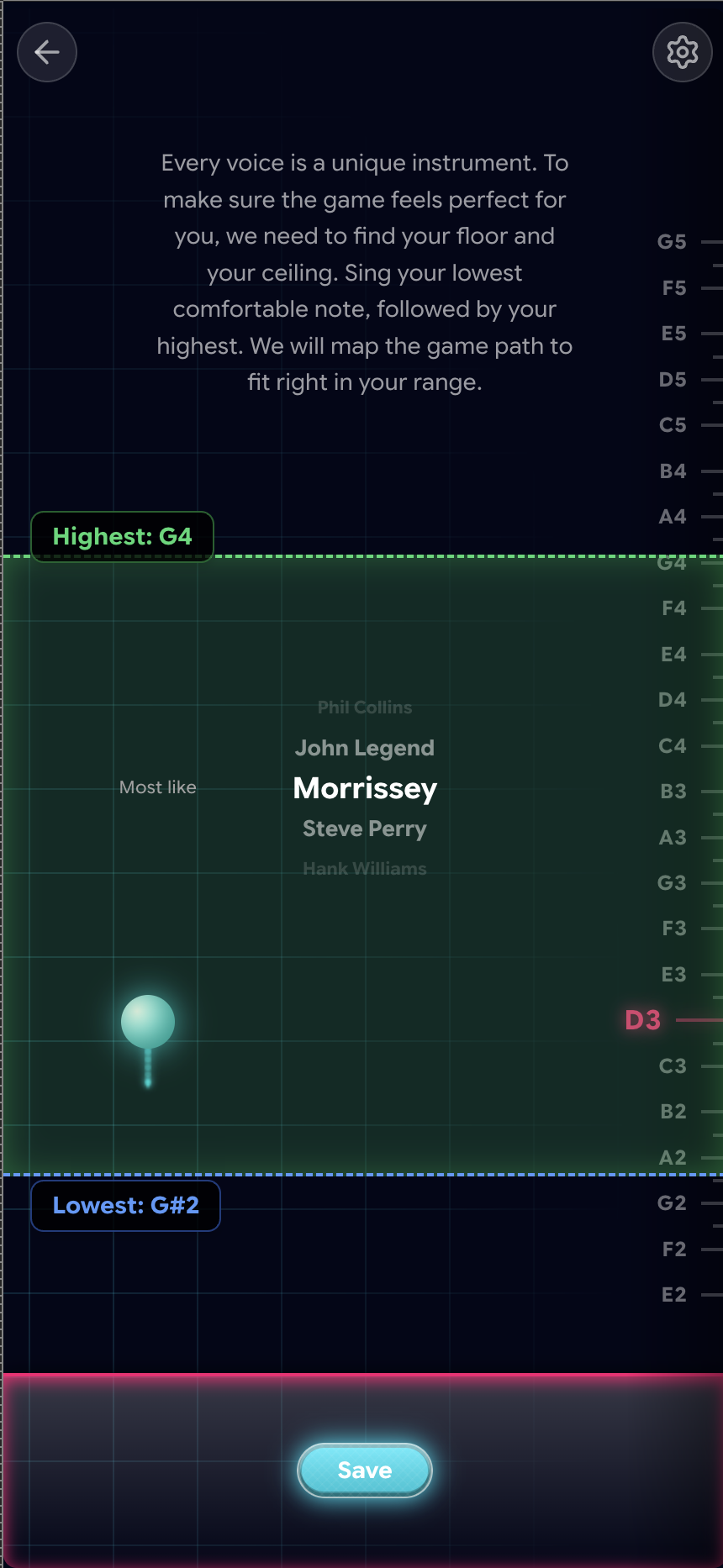
Sing your lowest comfortable note, then your highest. Pitch Pilot uses that range to lay every level out inside your register — so a bass, a tenor and a soprano can all play the exact same campaign and run the same training drills, each in the part of their range where it actually feels good to sing.
From freeform campaign runs to laser-focused ear training, every mode listens to the same thing — you.
Pilot the ball through notes, gates, slides and arcs. Hit shards for bonus, dodge discordants, and earn a C or better to unlock the next level.
Listen to a sequence. Sing it back in order. Each round adds a note — how far can you hold the pattern?
Graded exercises from warm-ups through pentatonics. Unlock as you progress — built with vocalists, for vocalists.
Each stage introduces a new obstacle, then layers it onto everything you’ve already learned. Land a C or better to unlock the next level. And every day, the Daily Challenge drops a brand-new level for everyone in the world to fly.
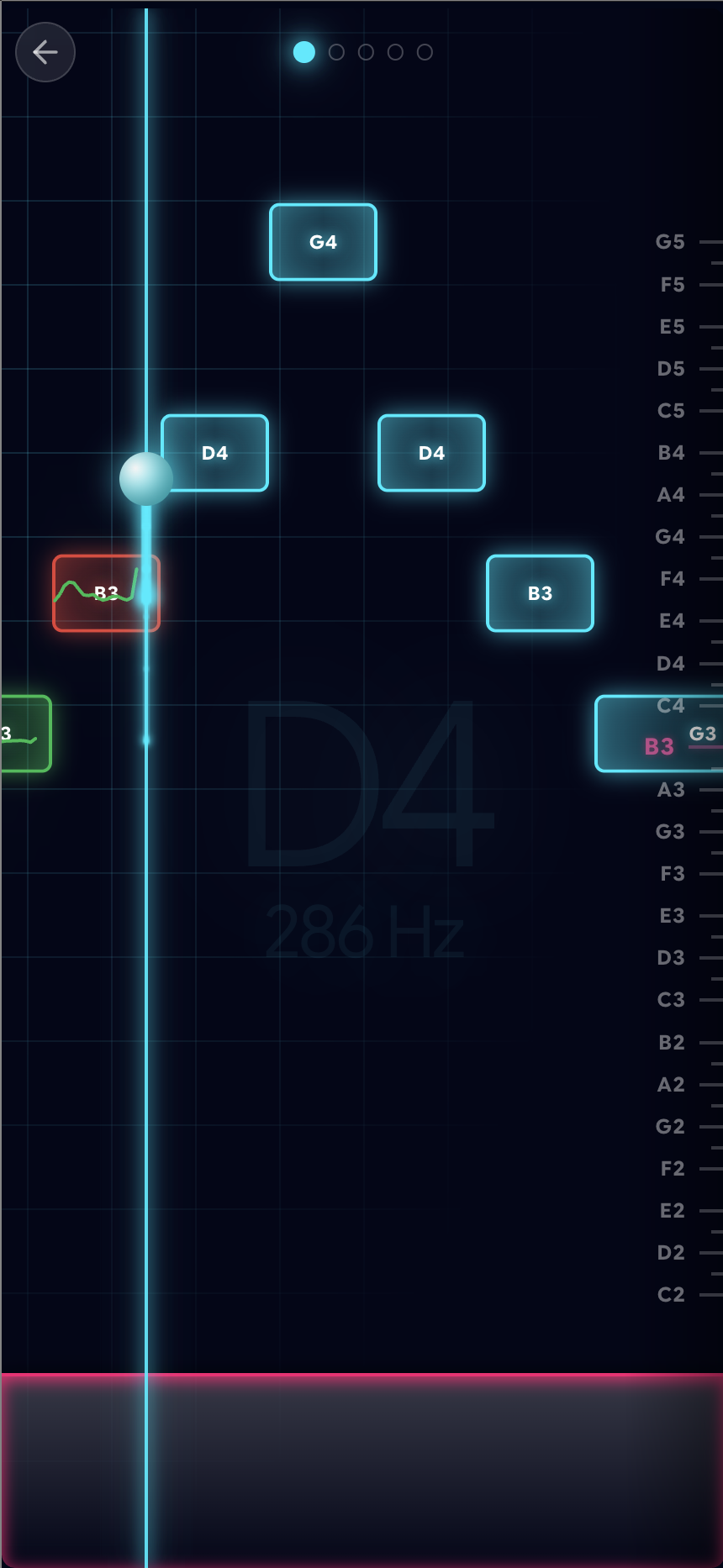
Sustain the pitch. Hold the line.
Hit a target pitch and hold it for the full duration. The ball measures coverage (time on pitch), accuracy (distance from centre) and precision (how steady).
Every other obstacle in the game stacks on top of the sustained note. Build the foundation first.
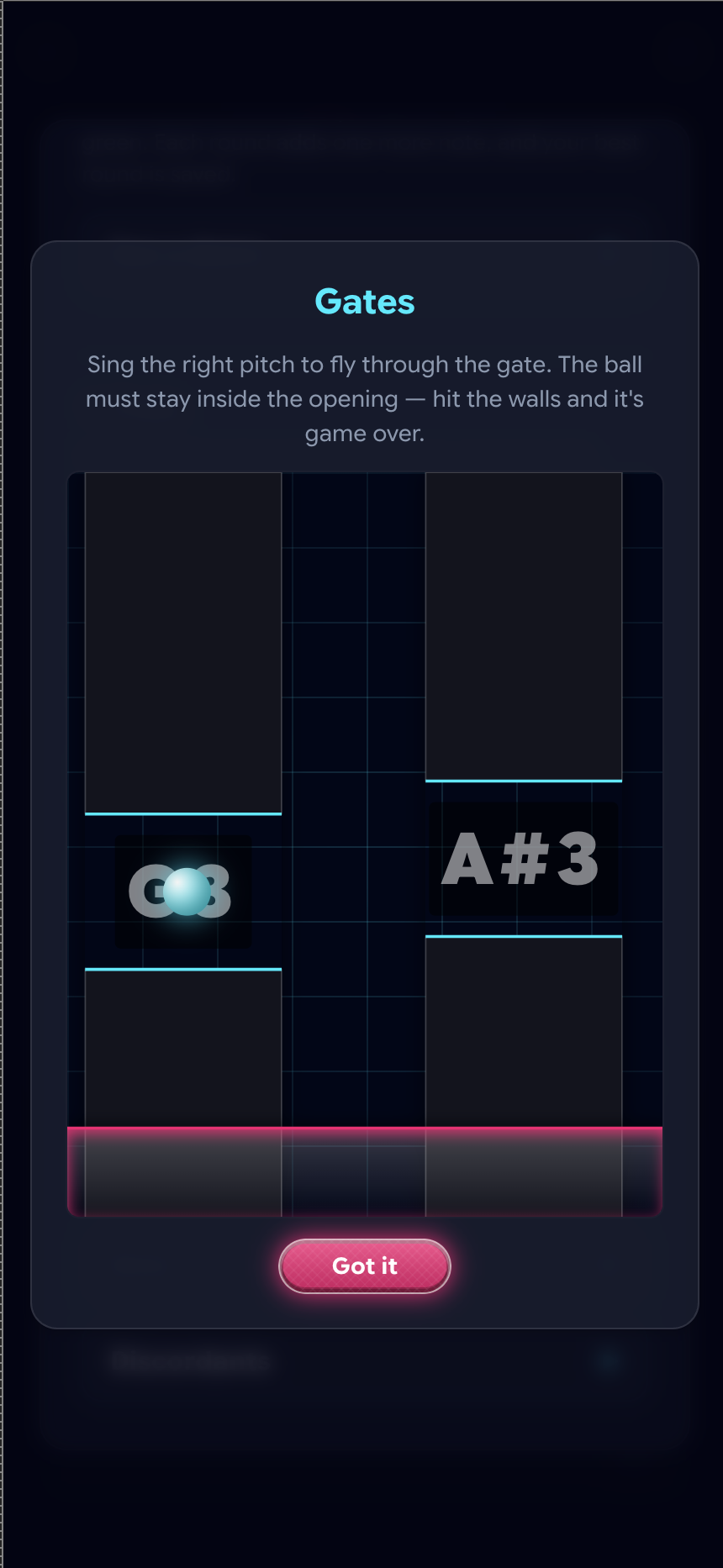
Fly the ball through the opening.
Sing the right pitch to fly through the gate. The ball must stay inside the opening — hit the walls and it’s game over.
Pitch under pressure. The wall is a hard fail; the opening tightens as you progress.
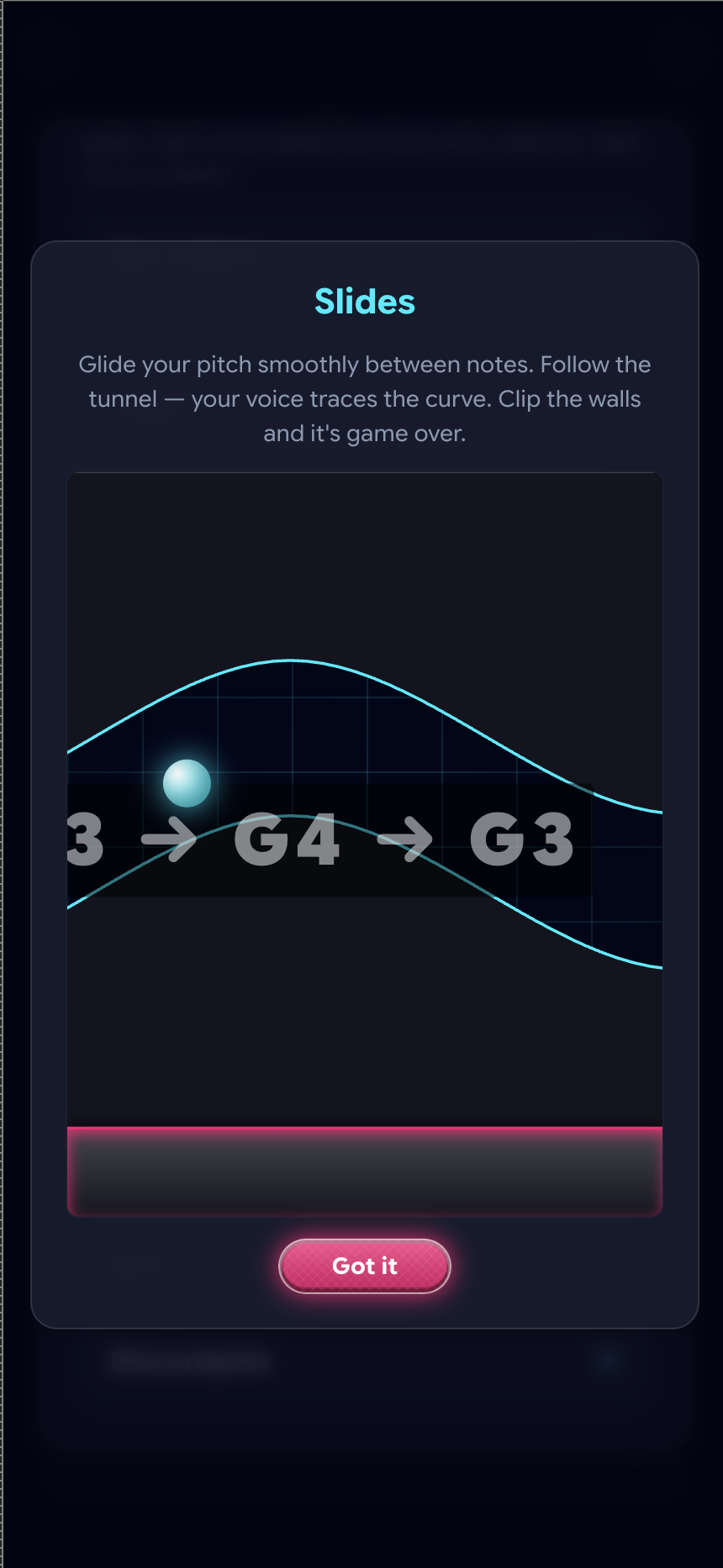
Glide between notes through a tunnel.
Glide your pitch smoothly between notes. Follow the tunnel — your voice traces the curve. Clip the walls and it’s game over.
Trains portamento and interval shape, not just static targets. The curve is the lesson.
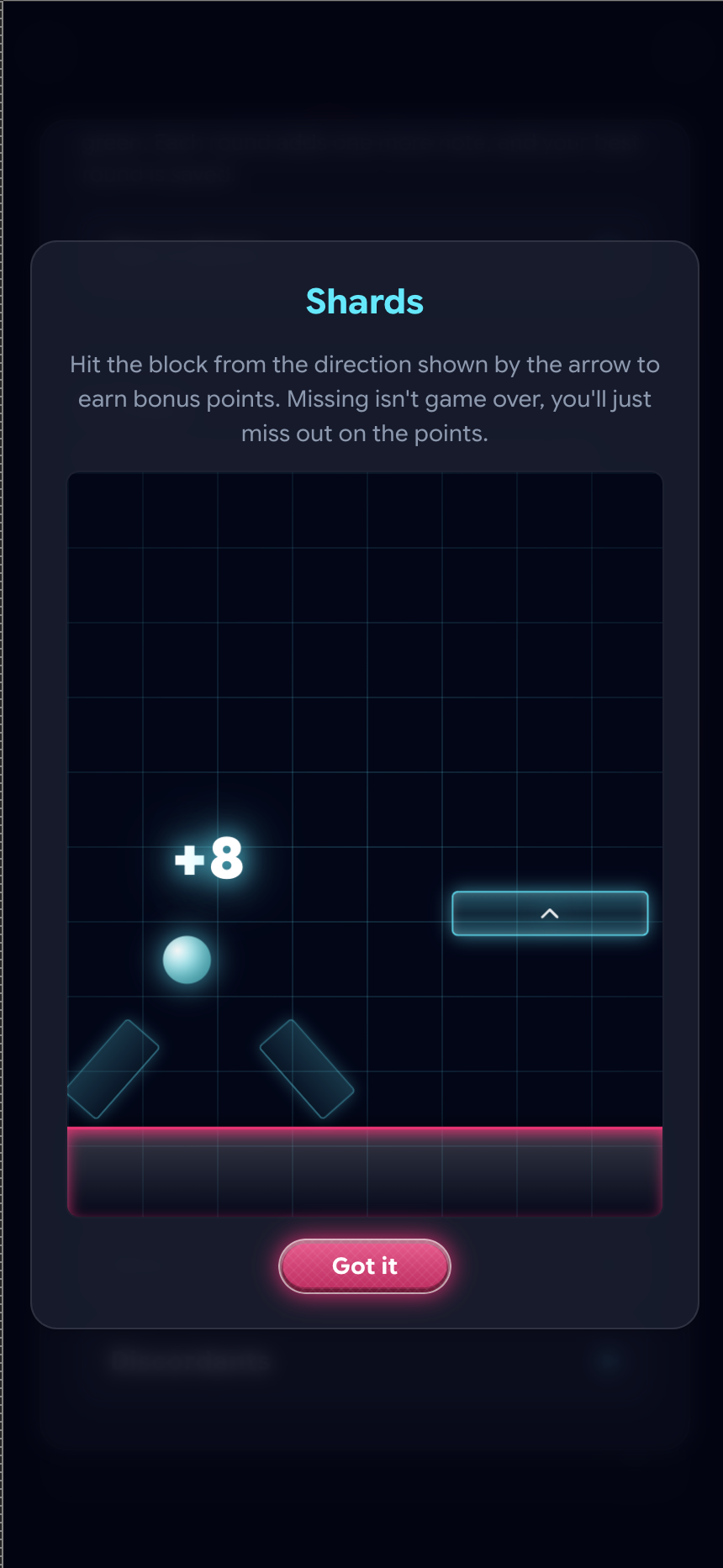
Strike from the right direction for bonus points.
Hit the block from the direction shown by the arrow to earn bonus points. Missing isn’t game over — you’ll just miss out on the points.
Pure score upside. Risk-free targets that reward good attack and timing.
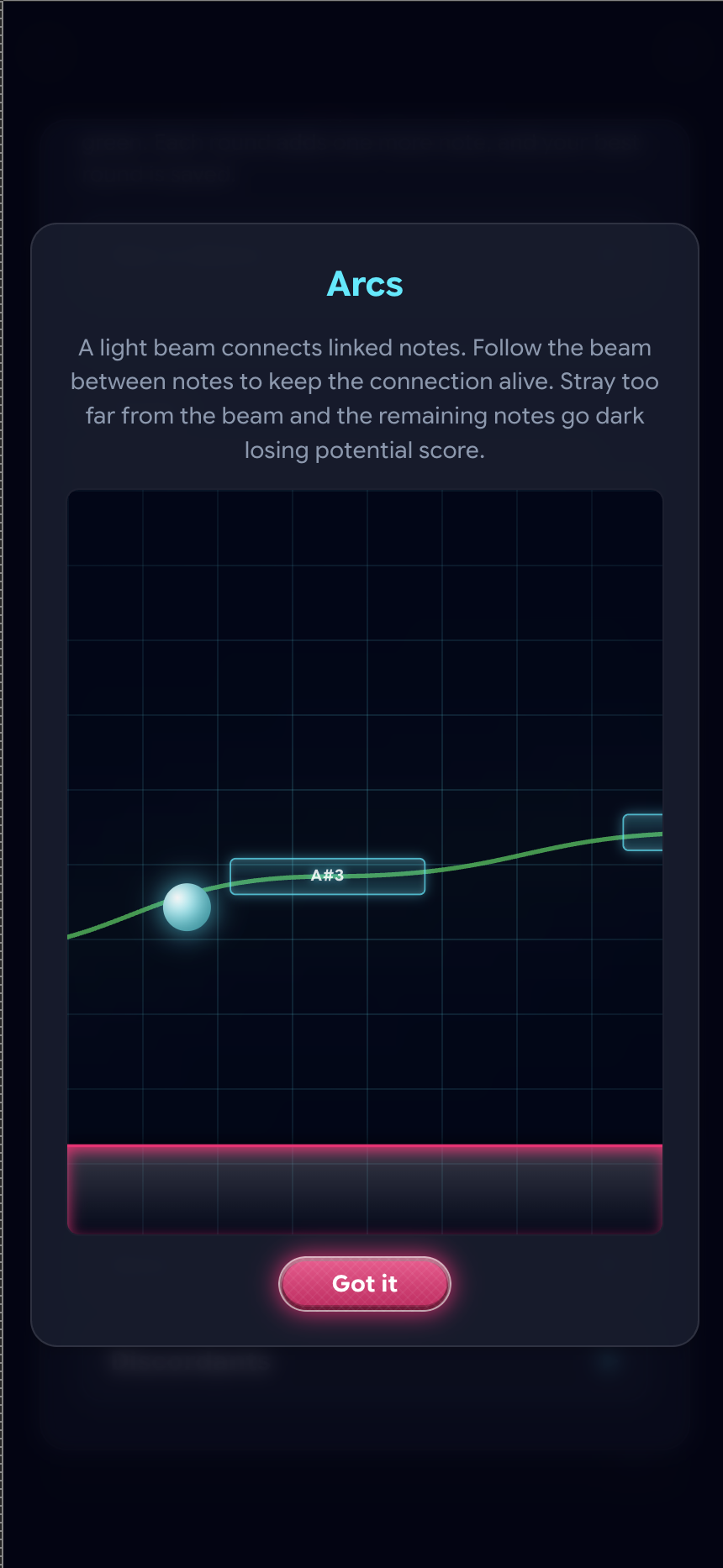
Stay in the beam between linked notes.
A light beam connects linked notes. Follow the beam between notes to keep the connection alive. Stray too far and the remaining notes go dark, losing potential score.
A softer cousin of slides — less punishing, but the score bleeds the moment your line drifts.
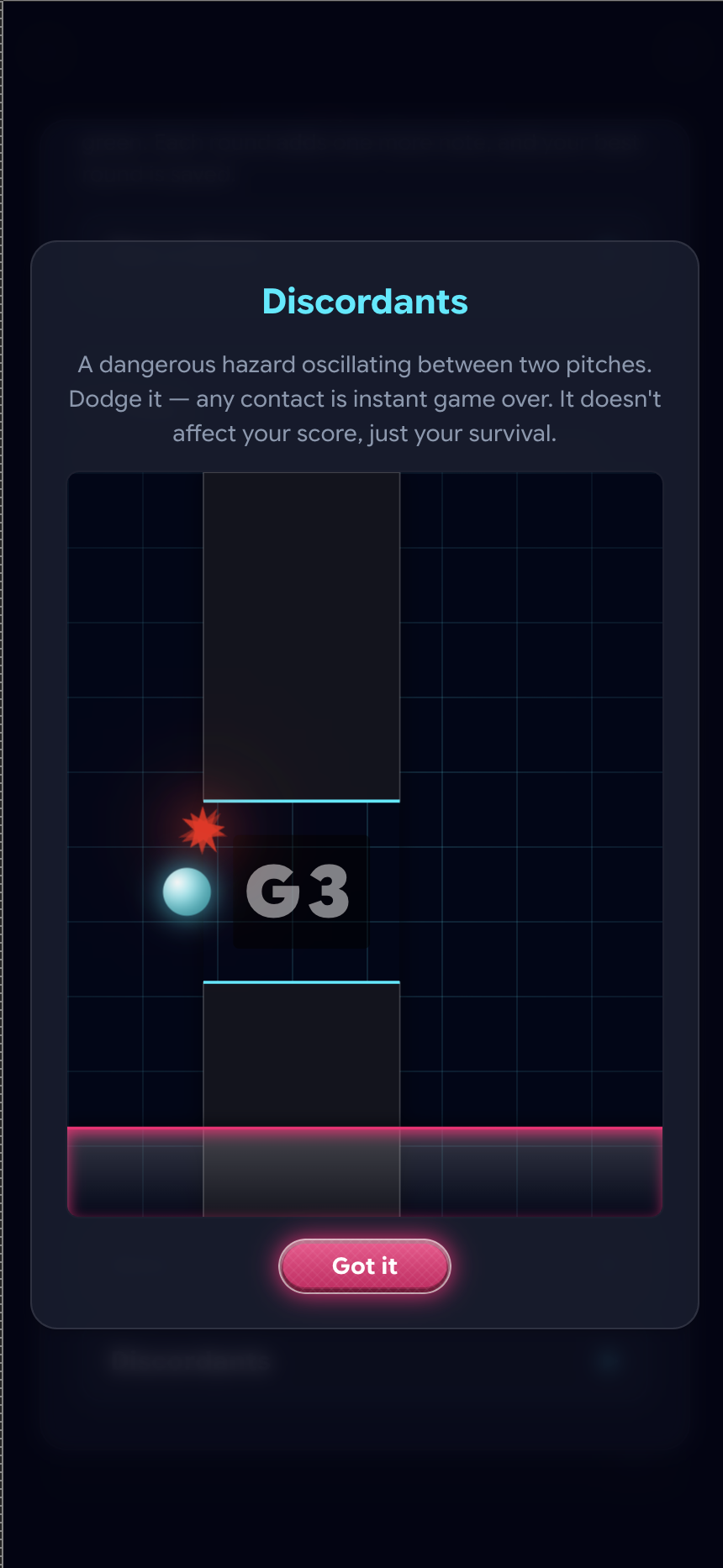
Dodge the hazard. Any contact is game over.
A dangerous hazard oscillating between two pitches. Dodge it — any contact is instant game over. It doesn’t affect your score, just your survival.
The capstone. Stage 6 mixes hazards, arcs, slides, shards, gates and notes — every system at once.
Listen to a sequence of notes. Sing them back in order. Land it and the next round adds another note. Miss one and the run ends.
It’s the simplest mode in Pitch Pilot, and the one that’ll surprise you. Recall is muscle: every round you survive is one more your ear and your voice can hold together. How long can you keep the pattern alive?
Every exercise is graded. Land a C or better to unlock the next stage — or flip the switch in Options to open everything you bought.
Wake up your voice and settle into pitch.
Sustained tones, the five-note climb (Do-Re-Mi-Fa-So…) and a major arpeggio.
Locks your ear to the calibrated key before you start chasing intervals.
The bright, hopeful interval — four semitones up.
Match a major third from the root, sing the round trip up and back, then stack it as harmony — with and without on-screen guides.
Major thirds are the backbone of major chords. Train them and your ear unlocks half of Western melody.
The shadowed cousin — three semitones up.
Same drills as Stage 1 — root→third, round trip, stacked harmony, blind tests — but on the minor third.
Minor thirds power every sad song you’ve ever loved. Hearing the one-semitone difference from a major third is the first real ear-training milestone.
Five semitones up — the “Here Comes the Bride” leap.
Root-to-fourth, round trip, stacked harmony and no-guide tests where you sing it cold.
Fourths anchor folk, gospel and most pop choruses. They’re also the gateway to thinking in scale degrees instead of memorised tunes.
Seven semitones up — the most stable interval after the octave.
Same drill set on the perfect fifth: ascending, round trip, stacked, and blind.
Fifths are the spine of harmony. Once you can hear them instantly, chord changes start to feel obvious instead of mysterious.
Five-note scales, leaps, thirds and licks.
Run the major pentatonic up and back, jump random pentatonic leaps from the root, alternate-thirds drills, and two real licks pulled from folk and blues.
The pentatonic is the world’s most-used scale. Internalise it and improvising melodies stops being guesswork.
Stages unlock as you progress — land a C or better to advance. Want to skip the chase? Options › Unlock everything opens every stage and exercise instantly.
The ball moves the instant your tone shifts — no taps, no buttons. Your voice is the controller.
Sing your lowest and highest comfortable notes. The grid maps to you — bass, alto, anything in between.
Coverage, accuracy, precision. Every challenge gets a grade. Earn a C or better to unlock what comes next — or flip the switch in Options to unlock everything at once.
Send your level, training and Daily Drop results to friends as a Wordle-style emoji grid — grade, streak, and a tap-to-play link, all in one share.
A new unique level every day. Retry as many times as you want — only your best grade counts. Once the day flips, that level is gone for good.
A built-in, user-controlled noise gate keeps the ball steady through fans, traffic and chatty rooms. Dial it in from Options to match your space.
Pitch Pilot is out now on Google Play — a one-time purchase, no ads, no IAP. iOS arrives soon; tap below to be first in line.